Loading...
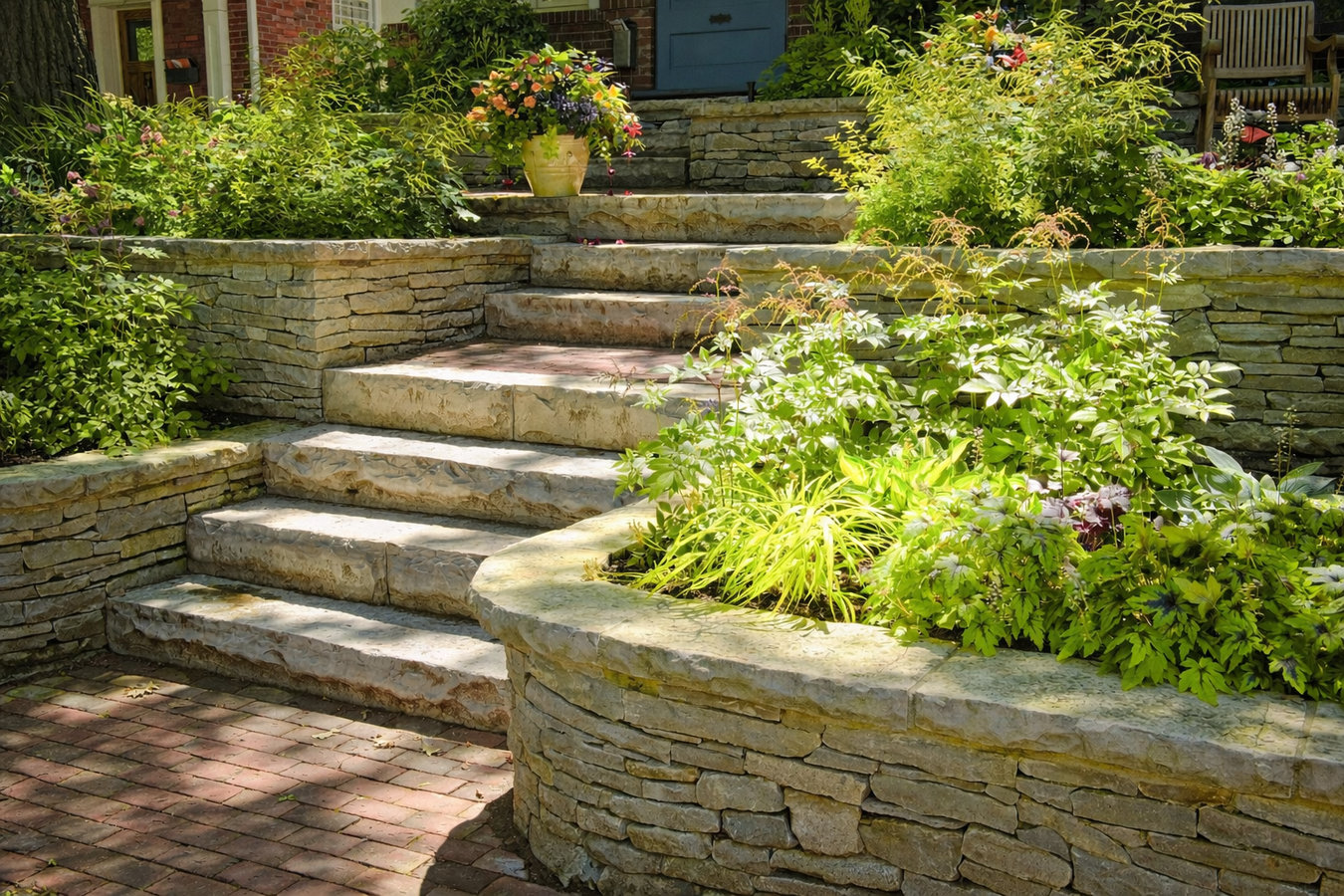
Soil washing down your slope every spring is not just an eyesore. We build retaining walls with proper drainage and frost-depth footings that hold up through Cheney winters for decades.
Retaining wall construction in Cheney, WA holds back soil on sloped lots using concrete block, natural stone, or poured concrete with drainage installed behind the wall, most residential projects take three to seven days depending on wall height and length.
A slope that erodes a little more each spring, or an existing wall that is starting to lean, is not going to stabilize on its own. In Cheney, where the fine loess soils on the Palouse move easily when wet and the ground freezes and thaws all winter, a slope under stress gets worse every season. A properly built retaining wall stops that cycle by holding the soil in place and routing water away from the wall through a gravel-and-pipe drainage system. If the eroding slope is also affecting nearby concrete - a driveway, patio, or walkway - you may want to consider masonry restoration for that damaged surface at the same time, since solving the grade problem first protects any surface work you do afterward.
We handle permits, excavation, drainage installation, and wall construction as a single project - and we explain every step before we start.
If dirt, mulch, or gravel collects at the bottom of a slope after rain or snowmelt, your hillside is actively eroding. Cheney's fine loess soil makes this especially common - it moves easily once saturated. Left alone, the erosion slowly eats away at your yard and can eventually undermine nearby structures.
A retaining wall that is no longer straight - leaning outward, bulging in the middle, or showing gaps at the top - is under stress it can no longer handle. This is common in Cheney after a hard winter of freeze-thaw cycles. A leaning wall does not fix itself and is much cheaper to address before it falls.
When a slope does not drain properly, water ends up sitting against your home's foundation or in low spots in your yard. This signals that the grade is working against you. A retaining wall with drainage built in redirects that water away from your home - a particular concern during Cheney's spring snowmelt season.
If a significant portion of your yard is a slope too steep to mow or plant, a retaining wall can turn that wasted space into a flat, functional area - a garden bed, a patio, or a level lawn. Many Cheney homeowners on hillside lots do not realize how much usable space they are giving up until they see what a terraced system can do.
We build retaining walls in concrete block, natural stone, and poured concrete, and we recommend materials based on your wall's height, your yard's appearance, and how it needs to perform in Cheney's climate. Concrete block and natural stone last the longest in eastern Washington conditions. Every wall we build includes a drainage layer of compacted gravel and perforated pipe behind it - that drainage system is not optional, because it is the single biggest factor in how long the wall holds. When you also need new hardscape around the yard, our concrete block walls service handles freestanding walls and property dividers using the same materials and site knowledge.
For larger sloped properties, we design tiered or terraced wall systems that break a tall slope into two or more shorter walls. Shorter walls are structurally simpler than a single tall wall, and they create usable flat areas at each terrace level. We pull permits for every project that requires one - in Cheney, that typically means walls over four feet - and we manage the inspection process so you do not have to coordinate with the city building department yourself.
Best for homeowners who want a durable, low-maintenance wall that handles Cheney's freeze-thaw winters without cracking.
Suited to properties where the wall's appearance needs to complement natural landscaping or an existing stone exterior.
Ideal for steeply sloped lots where a single tall wall would require an engineer's review or create too much pressure on the footing.
For homeowners with an existing wall that is leaning, cracking, or failing and needs to be assessed for repair versus full replacement.
The soil around Cheney is largely loess - a fine, wind-deposited silt that makes the Palouse one of the most productive farming regions in the country, but that behaves poorly under construction loads. Loess is loosely packed and erodes quickly when it gets wet, which means sloped lots in Cheney lose ground faster than properties in cities with denser clay-heavy soil. Add the repeated freeze-thaw cycles from November through March, where temperatures regularly swing above and below freezing in a single week, and you have a site environment that demands deeper footings and more drainage than milder climates require. A wall built without accounting for these conditions - either because the contractor is not familiar with Palouse soils or because they cut base preparation short to lower their quote - will show signs of stress within a few winters. The investment in getting it right the first time is much less than the cost of rebuilding a failed wall and repairing the damage it causes on the way down.
We serve homeowners throughout the region, including properties in Spokane Valley and Medical Lake, where sloped lots and Palouse-adjacent soils create the same challenges. The same deep-base and drainage standards we use in Cheney carry over to every job we take in the region. For guidance on Palouse soil conditions and erosion management, Washington State University Extension publishes research through extension.wsu.edu that informs how experienced local contractors approach these sites.
We respond within one business day of your first contact. We ask a few questions - slope height, wall length, and what is driving the problem - then schedule a free on-site visit to assess your soil, drainage, and what will be above and below the wall.
After the site visit you get a written estimate that breaks out materials, labor, and permit fees separately. No single-number quotes with no explanation. You make your decision with full information about what you are paying for.
If your wall requires a City of Cheney permit - likely for anything taller than four feet - we submit the application and manage the process. Permit approval typically takes one to two weeks. We confirm your start date once the permit is in hand.
We excavate to stable ground, build the wall course by course with drainage gravel and pipe installed behind it as we go, then backfill and grade so water drains away from the wall. If a city inspection is required, we schedule it and coordinate directly with the building department.
Free on-site estimate, no obligation. We reply within one business day.
(509) 241-9778Cheney's loess soils erode faster and compress differently from the clay-heavy ground contractors work with in other parts of Washington. We have built walls in this area and know from experience what base depth and drainage the soil demands - not just what a generic installation guide recommends.
Every retaining wall we build includes a gravel layer and perforated drain pipe behind it. We do not quote walls without drainage as a baseline and then charge extra to add it. A wall without drainage fails prematurely in Cheney's wet spring seasons, and we are not willing to build one that way.
We pull the City of Cheney building permit, keep the project on the city's timeline, and schedule the required inspection before the project is closed out. You do not need to make a single call to the building department. Your finished wall is a permitted asset on your property record.
Walls in Cheney need footings that reach below the frost line to prevent heaving when the ground freezes. We design footings to the depth that Cheney's elevation and climate require - deeper than what milder-climate specifications call for. The National Concrete Masonry Association's standards inform our design baseline.
A retaining wall that is permitted, properly drained, and built to your local frost depth is not a premium upgrade - it is the minimum standard for a wall that will still be standing straight in 20 years. For design standards on segmental retaining walls, the National Concrete Masonry Association publishes technical guidelines we follow on every job.
Repair or restore deteriorating masonry on walls, steps, and other structures affected by years of eastern Washington weather.
Learn MoreFreestanding concrete block walls for property boundaries, privacy screens, and structural dividers built to last in Cheney's climate.
Learn MoreSpring and summer project slots fill fast - contact us now and we will assess your slope and give you a written quote before the season is gone.