Loading...
Cheney Concrete and Masonry is a local masonry contractor serving Spokane Valley with retaining walls, tuckpointing, and foundation repair. We have worked on homes throughout the valley since 2020 and respond to every inquiry within one business day.
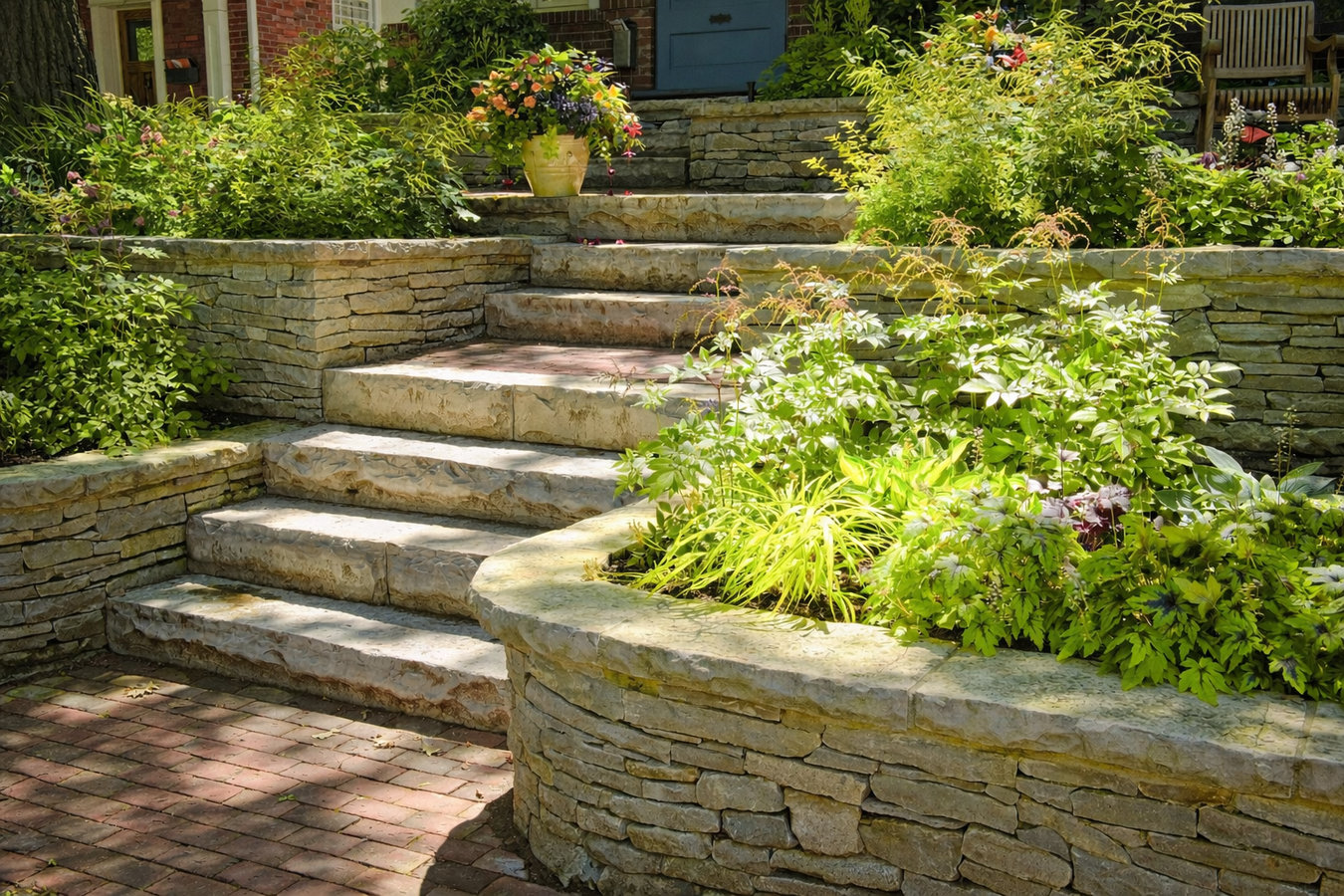
Spokane Valley homes on sloped lots near the river corridor or along the valley's edges deal with soil movement every spring when snowmelt saturates the ground. The glacial outwash soils under much of the valley drain quickly in most spots but shift in low-lying areas, making a properly built retaining wall - with deep footings and drainage built behind it - essential for stopping erosion. Our retaining wall construction work is designed for this specific climate and soil profile.
Mid-century ranch homes in Spokane Valley often have brick chimneys and veneer walls with mortar joints that have been weathered by decades of freeze-thaw cycles. Once mortar joints start to crack and recede, water gets behind the brick and the damage accelerates with every winter. Repointing those joints before significant spalling occurs is far less expensive than replacing brick or repairing water-damaged wall cavities.
Homes near the Spokane River in northern Spokane Valley sit on lower ground where the water table is closer to the surface and frost penetrates deeply each winter. That combination puts real pressure on concrete block and poured foundations over time, especially in homes built in the 1950s and 1960s when footing depths were sometimes shallower than modern code requires. Cracks, bowing walls, or sticking doors are all signs worth investigating before the next winter.
Spokane Valley's 45 inches of average annual snowfall puts chimneys through hard winters year after year. Freeze-thaw cycling cracks mortar, spalls brick faces, and degrades chimney crowns - and a chimney that is not watertight lets moisture into the flue liner and the wall cavity. Addressing chimney damage while it is limited to mortar joints is much cheaper than replacing a liner or repairing structural brick damage.
Spokane Valley's freeze-thaw winters crack and heave poured concrete driveways faster than in warmer climates. Paver driveways handle seasonal ground movement better than monolithic slabs because individual units flex and can be reset or replaced section by section - a practical advantage on the valley's flat lots where drainage from below is limited and frost penetrates deeply.
A significant share of Spokane Valley's housing stock dates from the 1950s through the 1980s, and many of those homes have original brick chimneys, veneer accents, or exterior walls that are now showing their age. Cracked or spalling brick lets moisture through to the substrate behind it, which in this climate means water damage that compounds with every winter. Patching and replacing damaged units early keeps a cosmetic issue from becoming a structural one.
Spokane Valley averages around 45 inches of snowfall per year, and temperatures cycle above and below freezing dozens of times between November and March. That repeated freeze-thaw pattern is the single biggest driver of concrete and masonry damage in the valley. Water finds its way into small cracks in driveways, mortar joints, and foundation walls, freezes, expands, and widens those cracks. Over several winters, what starts as a hairline crack becomes a real problem. Homes on lower ground near the Spokane River face additional pressure from a shallower frost line and occasional groundwater fluctuations.
The soils under much of Spokane Valley are glacial outwash - a mix of sand, gravel, and silt left behind by ancient glacial floods. In most areas, this drains well. But in low spots and older neighborhoods, the soil can shift under foundations after heavy snowmelt, especially where original footings did not go deep enough to reach stable ground. Spokane Valley incorporated as its own city in 2003 and has its own building department, so permit requirements for structural masonry work here are separate from Spokane's. A contractor who regularly works in Spokane Valley knows the local permit process and does not treat it as an obstacle.
Our crew works throughout Spokane Valley regularly and pulls permits through the City of Spokane Valley's Community Development department for any structural work that requires one. We know the city's typical permit turnaround times, which means we give homeowners realistic scheduling windows instead of vague estimates. The wide variety of housing in the valley - from 1950s ranch homes on flat mid-sized lots to newer two-story subdivisions in Greenacres - means we encounter the full range of masonry conditions on a regular basis.
Spokane Valley stretches about 38 square miles along the Spokane River corridor, and we work across all of it - from older neighborhoods near Sullivan Road and the Spokane Valley Mall to newer streets on the south and east edges of the city. The Centennial Trail follows the river through the northern part of the valley, and homes in that corridor sit on lower ground where drainage and moisture conditions are different from the higher, drier parts of the city. We account for those differences in how we design and install drainage for retaining walls and foundation repairs in those areas.
We also serve the communities surrounding Spokane Valley. If your project is in Veradale just to the south, or in Spokane to the west, we work in those areas as well.
Reach out by phone or through the contact form and describe what you are seeing - cracks, leaning walls, heaved concrete, or sticking doors. We respond to every Spokane Valley inquiry within one business day and do not require you to know the technical cause before you call.
We visit the property, inspect the affected area, and check for underlying causes - soil conditions, drainage, footing depth, or moisture. You receive a written, itemized estimate before any work is agreed to, so you know the full cost up front. There is no pressure to commit on the spot.
For structural jobs, we submit the permit application to the City of Spokane Valley on your behalf. Once permits are in hand, we confirm your start date and give you a realistic timeline for the work. You do not have to contact the building department yourself.
The crew completes the work, cleans the site, and walks you through what was done and what to watch for. If a city inspection is required, we coordinate that appointment so the project is properly closed out and documented on your property record.
We serve all of Spokane Valley, WA. Written estimates, no pressure, and a response within one business day.
(509) 241-9778Spokane Valley is one of the largest cities in Washington State, with a population of around 102,000 people spread across roughly 38 square miles east of Spokane. The city incorporated in 2003, separating from unincorporated Spokane County and establishing its own government, building department, and permit process. The housing stock is dominated by single-family ranch homes built from the 1950s through the 1990s, giving the city a largely mid-century residential character. Newer subdivisions on the southern and eastern edges - including the Greenacres and Liberty Lake corridors - have brought more contemporary two-story homes since the 2000s. Most lots are mid-sized and flat, with concrete driveways and attached garages typical across the city.
The Spokane River flows through the northern part of the valley, and the Centennial Trail follows it for miles through the city - a feature that shapes the neighborhoods along its banks and draws daily use from residents across the area. CenterPlace Regional Event Center in Mirabeau Point Park serves as a community hub for events and gatherings. About 60% of homes in Spokane Valley are owner-occupied, and the community has a working-class and middle-income character. Neighboring communities include Veradale to the south and Opportunity to the southwest, both of which we also serve.
Replace cracked or damaged bricks to restore appearance and structural integrity.
Learn MoreBuild strong retaining walls that manage erosion and grade changes.
Learn MoreEnhance any surface with beautiful, lasting natural or manufactured stone.
Learn MoreConstruct solid concrete block walls for privacy, security, or structure.
Learn MoreBuild a reliable block wall foundation engineered for lasting performance.
Learn MoreDesign and build walkways that are safe, durable, and visually appealing.
Learn MoreRefresh worn mortar to protect your brickwork from water and weather damage.
Learn MoreCall us today or submit a request online - we respond within one business day and serve all of Spokane Valley, WA.